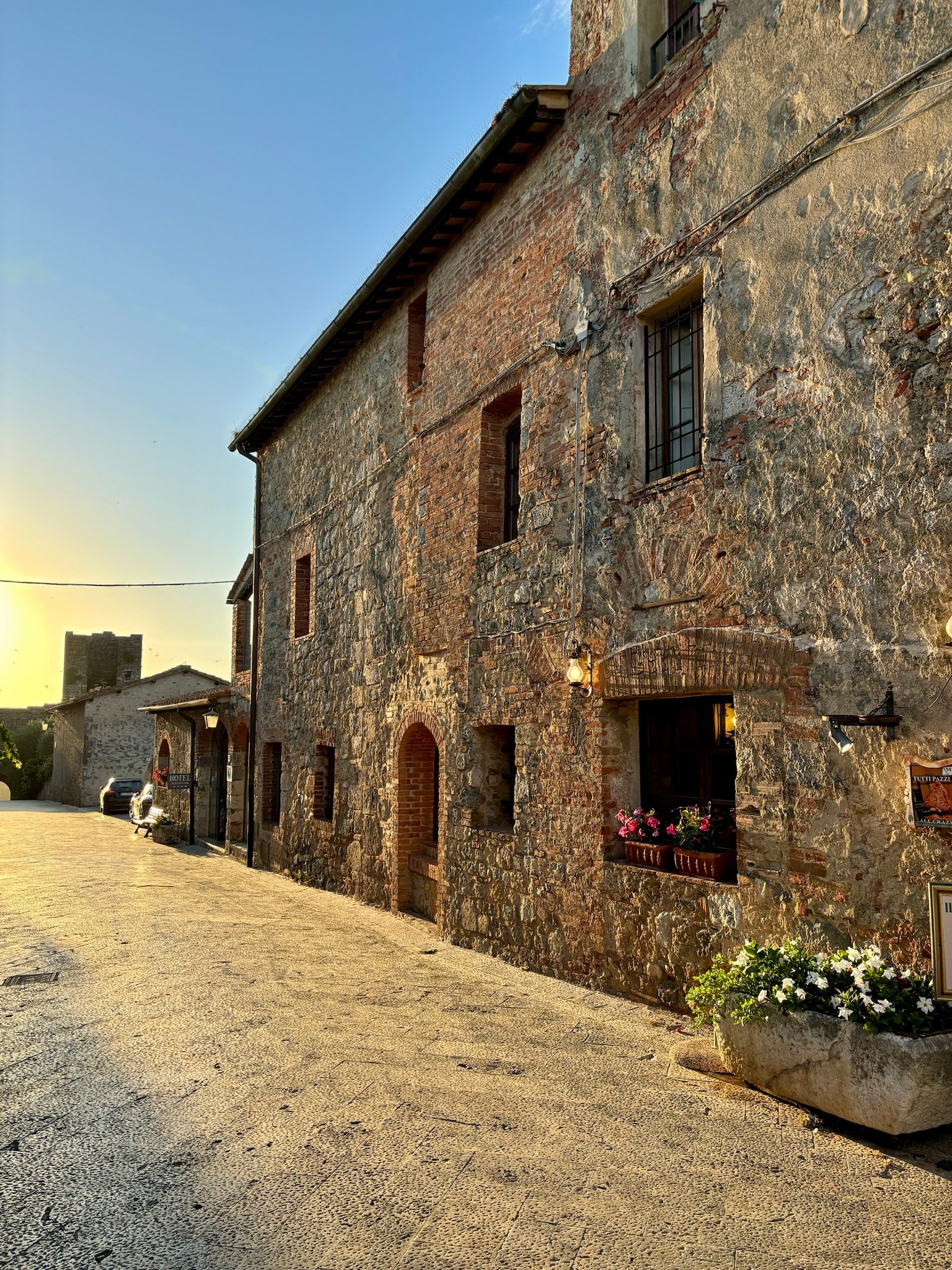
Tuscany is a 10/10 for families, yet it's also where I see the biggest gap between expectation and reality. Not because Tuscany disappoints — it absolutely delivers. But families often arrive with a very specific "Under the Tuscan Sun"-fantasy in their heads. That version exists. You just have to plan for it intentionally. Here are 10 real, practical truths I wish every family knew before going.
1. Your Base Matters More Than Almost Anything Else
This is the single most important decision in a Tuscany trip. The region is large, and trying to see all of it from one base is almost always a mistake. Most families do better choosing a base depending on their vibe. Here's an easy breakdown:
Northern Tuscany: best for families who want some city time, easier logistics, and a mix of culture and countryside. This is where Florence and Lucca come in. Florence is a must for art lovers, while Lucca is calmer, more relaxed, and often easier with kids.
Central Tuscany / Chianti: this is the classic Tuscany people picture. Rolling hills, vineyards, cypress trees, stone farmhouses, pretty hill towns. It is usually the sweet spot for a first Tuscany trip and often the best overall fit for families who want that dreamy countryside feel.
Southern Tuscany: more dramatic, more remote. Think Val d'Orcia, Montalcino, and Montepulciano. It is beautiful and special, but usually better for families who want a quieter, more tucked-away version of Tuscany rather than the greatest hits.
2. Driving Is Non-Negotiable, and Mostly Part of the Fun
Tuscany is a road trip. Trains connect the major cities, but they do not give you the quintessential meandering countryside experience. You need a car to truly see Tuscany. Without it, you'll feel isolated and leave wondering what all the fuss is about. But the driving isn't for wusses. The roads are winding and narrow, and you'll often think "there's nooo way two cars can fit on this road." They can, and they will. That said, once you settle into it, driving here is one of the pleasures of the trip.
3. Shoulder Season Is Best
June is the ideal time (or September if you're not yet bound to school calendars). Peak summer in Tuscany can be beautiful, but it is also hot, expensive, and much more crowded. Sweating your way through Siena or San Gimignano at midday in July is not exactly the dreamy version people have in mind.
Late June and September usually give you the warmth, beauty, and long outdoor meals people want, without quite so much heat or friction.
4. A Good Lunch > Dinner Out
Remember what I said about driving? Getting back in the car for dinner can feel like a drag, and that's not how you want to end your day in Tuscany.
The days here get long, and I mean that in the best possible way. You're out exploring, driving between towns, doing a long lunch somewhere beautiful, stopping at a winery or two, wandering cobbled streets in the afternoon heat. By the time the light starts to change, you're happy and full and a little sun-worn. That's the Tuscany experience at its best. What you don't want is to get back in the car.
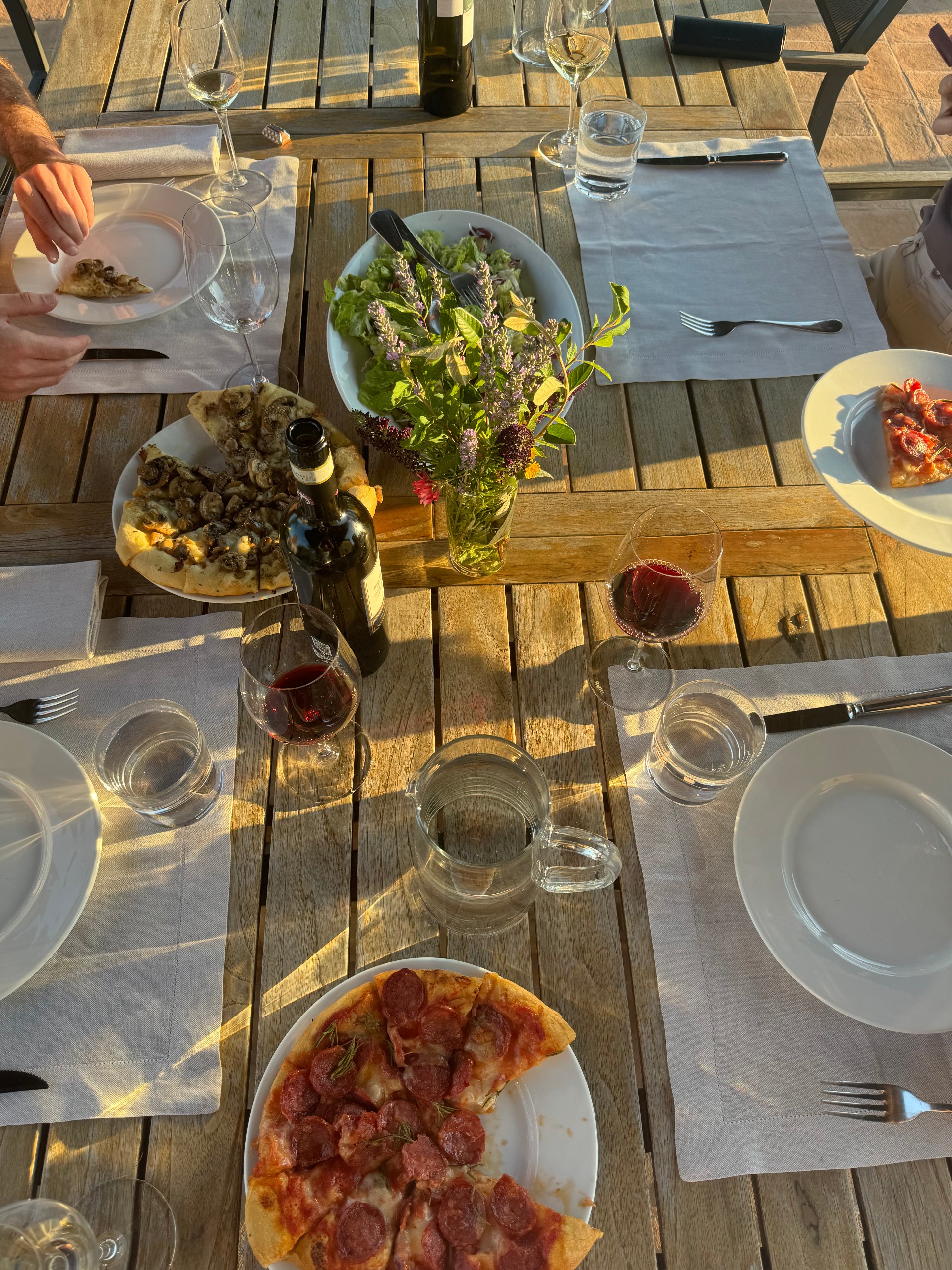
That's why I recommend prioritizing a fabulous lunch as the main event, and keeping dinner closer to home. This might mean the restaurant on-site at your villa or resort, or bringing in a private chef for a pizza dinner at your villa, which I love. You can truly linger and enjoy yourself without rushing back for bedtime, and there are almost always leftovers that stretch into the next day. (Added tip: book the chef dinner for earlier in the week so you don't waste any leftovers.)
5. Agriturismo Is Often the Best Family Format
This is one of the most underused formats in luxury Tuscany. The best agriturismos give you what many families actually want: outdoor space, a pool, room to exhale, excellent food, and a rhythm that suits family travel far better than a traditional hotel sometimes does. They feel like Tuscany, not just a hotel dropped into it.
They are not right for everyone. You are rural, you will be driving, and the experience is intentionally slower. But for the right family, they are often the best part of the trip.
6. The Tuscany Properties I Reach for Most for Families
If a family wants a full-service luxury hotel, Castello di Casole, A Belmond Hotel and Rosewood Castiglion del Bosco are the two big hitters. Both deliver that polished, deeply atmospheric version of Tuscany people dream about, and both also offer villas, which is a huge plus for families who want more privacy and space without giving up hotel service. Belmond has two signature villas at Castello di Casole, while Rosewood has eleven restored villas across the estate, including multi-bedroom options with private pools.
Borgo Pignano is another favorite. I really like it for those who want a more boutique and design-minded vibe, but still need something relaxed and grounded enough for a family. The setting is gorgeous, the pace is slower, and it offers the kind of activities that make sense in Tuscany rather than generic resort programming. The biggest practical win, though, is the separate children's pool. That is huge. It is one of those details that sounds small until you are traveling with kids and realize it can make the entire day feel easier.
And then there is the option I increasingly think is smartest for many families: villa rentals. Especially with younger children, grandparents, or anyone wanting a more relaxed rhythm, a villa often gives you the best version of Tuscany. More space, your own pool, proper outdoor living, and the ability to shape the day around your family instead of around hotel logistics.
The catch, of course, is that sifting through villas is overwhelming. There is so much inventory, and the photos rarely tell the full story. This is very much one of those categories where we can help narrow the field, flag what is actually well located and family-friendly, and save you from disappearing into a rabbit hole of beautiful-but-not-quite-right options.
7. The Florence Question
Florence is not a box to check, and it's also not right for every family trip, and that's okay to say out loud.
If you or your partner are art and history lovers, it belongs on the itinerary and deserves real time. The Uffizi, the Accademia, the Duomo, the Oltrarno, done properly, with space to actually absorb it — you want at least two days. But if you're traveling with young kids who get hot, overstimulated, and done with museums approximately twelve minutes in, Florence is one of those places where the honest answer might be: skip it this time. The countryside will give you more. A cooking class, a morning at a working farm, a pool afternoon. That's the version of Tuscany that will actually land for young kids, and trying to squeeze in a half-day in Florence on top of it could just add headache to an otherwise easy trip.
Florence will always be there. Come back when you can meet it on its own terms.
8. Yes, Go to the Touristy Towns
One of the best ways to spend a day in Tuscany is picking a beautiful town, wandering, doing some shopping, settling into a long lunch, and letting the day unfold from there.
Hot take: the more popular towns are often actually the better choice with kids. I know that sounds counterintuitive, but hear me out. The smaller, quieter hilltowns are stunning — architecturally, visually, all of it — but for kids, there's often not much to do beyond walking around and admiring views they didn't ask to admire. The busier towns have more energy, more shops to duck into, more gelato stops, more things happening. That friction that makes adults hesitate is often exactly what keeps kids engaged.
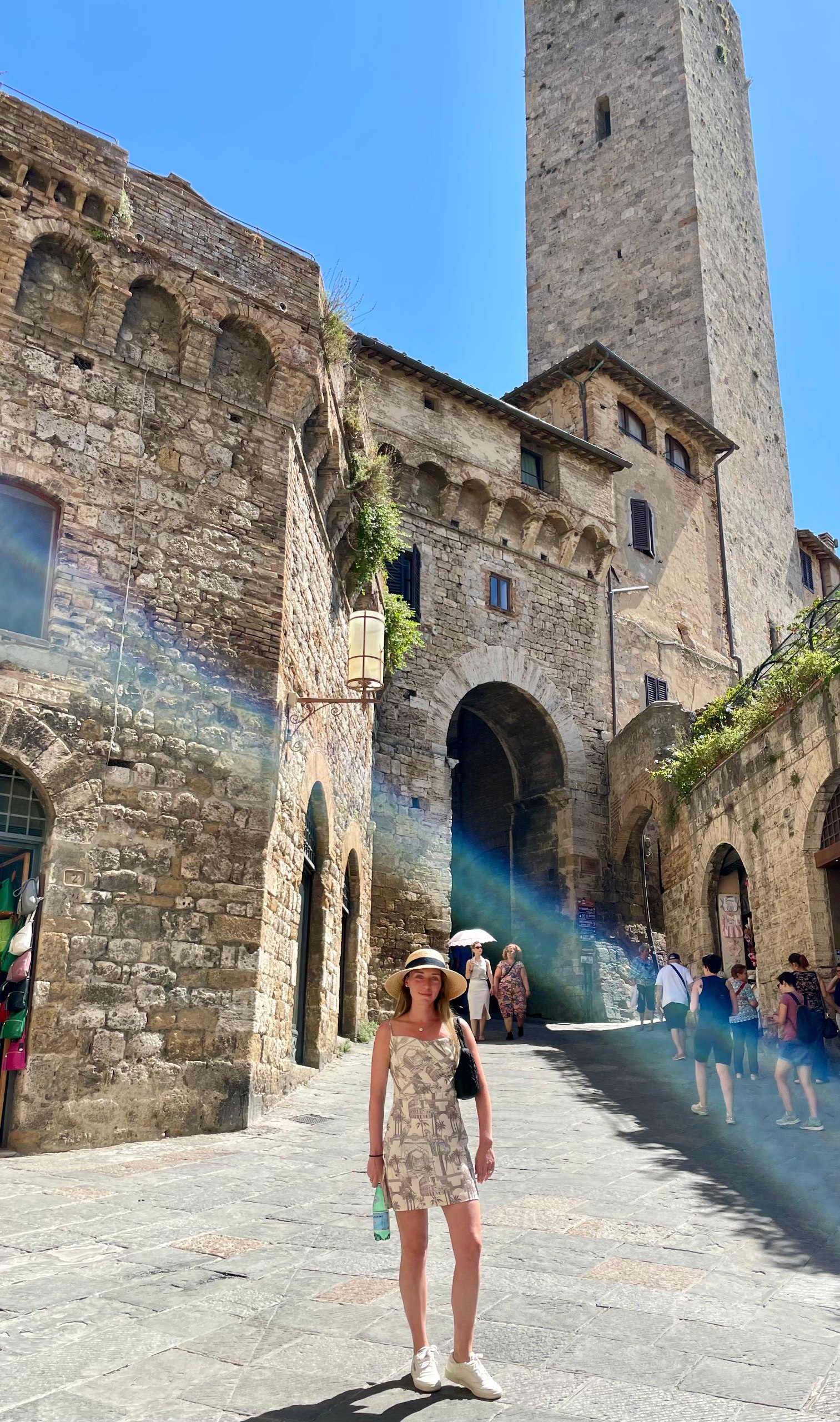
San Gimignano is a perfect example. It gets a bad rap for being crowded, and yes, it absolutely can be. But it's also popular for a reason. It's striking, fun, and has some of the best shopping around if you get a little beyond the main drag. My husband found his go-to leather wallet and a summer linen shirt he still wears here. There are genuinely good restaurant gems if you wander past the main squares. It's very easy to write off as too touristy. I think that's a mistake, and with kids especially, it earns its place on the itinerary.
Volterra has a different feel. A little moodier, a little less polished, and less overrun, yet still classically Tuscan. If your week lines up with a Saturday, build your morning around the weekly market in Piazza dei Priori, a proper local affair with produce, flowers, cheese, and bread, nothing curated for tourists.
9. Wine Experiences Can Actually Work Well for Families
Tuscany is wine country, obviously, but that does not mean vineyard visits are only for adults. Many estates are very used to hosting families and make the experience feel enjoyable for everyone. Kids taste olive oil or grape juice, adults do the wine tasting, and everyone gets a sense of the land and the food culture. Done well, it is both educational and fun.
The right winery depends a lot on where you're staying and the makeup of your group, so this is something we love helping with during the planning process. We'll point you toward estates that are set up for families, have beautiful grounds to wander, and make the visit feel like an experience rather than just a stop on the itinerary.
10. Build in Time to Do Absolutely Nothing
This is the part American families are often worst at, and it is also the part that makes Tuscany feel like Tuscany. The best trips here have slack in them. A slow breakfast, a meandering hill-town wander, a long lunch, pool time, dinner when dinner happens.
The families who try to see everything leave tired. The families who let Tuscany unfold a little come home feeling like they actually experienced it.